15.6. Certificates
GEISA relies on x.509 certificates for device authentication and for validating signatures. This section discusses expectations for certificate management within the GEISA COE.
15.6.1. Signing Certificates
As discussed in Digital Signatures GEISA requires signatures on
applications, application manifests, and firmware images. Signing certificates
are to be provided to the System Operator as x.509 certificates (see [X509]).
Certificates SHOULD be provided in text (.pem) or binary (.cer
/ .der) format. ADM conformant EMS must support importing certificates
in both formats.
15.6.2. Bootstrapping Certificates
As per Bootstrapping, GEISA clients must support Client initiated bootstrap (required of all LwM2M devices) as well as Factory Bootstrap. GEISA devices MUST include an initial IDevID (see [IEEE8021AR] for definitions) issued by the manufacturer. This IDevID is used during the initial authentication process.
The initial bootstrap follows the process shown below:
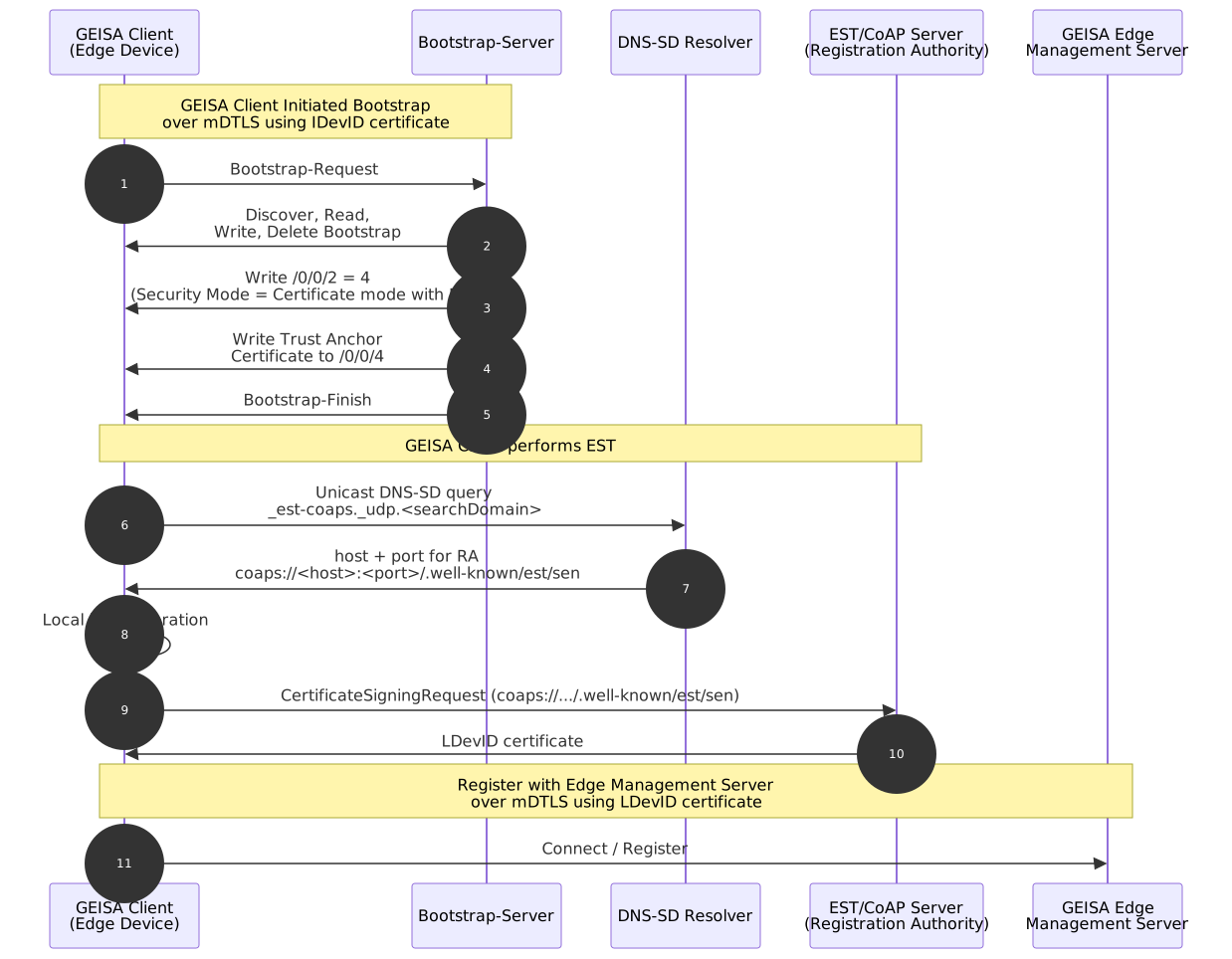
Figure 15.1 Enrollment over Secure Transport triggered by Client-Initiated Bootstrap
This is a basic two-certificate model in which the IDevID is used for initial authentication and then an LDevID issued as an operational certificate for session authentication (i.e. mDTLS). Sometime this model refers to the IDevID as a “birth certificate,” and the LDevID as a”driver’s license”. The birth certificate is used to obtain a driver’s license which is used for subsequent session establishment until it expires or is renewed. If the LDevID needs to be replaces, the device returns to the IDevID to reauthenticate.
This process facilitates a transition from a manufacturer provided IDevID to an operator provided LDevID, but it does not address concerns of key sovereignty. Specifically, many utilities have policies that do not allow on-going use of externally provided certificates or keys for authentication. If the device reboots and needs to reauthenticate, typically it will return to its IDevID to reauthenticate.
Many utilities require a three certificate model. In this model the IDevID is used to obtain a long-lived LDevID which effectively replaced the IDevID. This long-loved LDevID is used to obtain a short-lived LDevID which is used for ongoing session establishment and is periodically replaced. In this model, the device never returns to its IDevID unless it goes through a full factory reset. The utility will typically configure the system to reject any subsequent device reauthentication using the IDevID once the long-lived LDevID is issued, flagging any attempts as potential attacks needing investigation.
The primary reason for this approach is that the utility does not have any control over the manufacturer’s certificate authority (CA). It is possible that the CA would be compromised, misused etc. It is just not acceptable to have an on-going dependencies on an external CA.
One analogy to this approach is a birth certificate, citizenship, driver’s license model. The IDevID (birth certificate) is used to complete a one-time “naturalization” process in which a device is issued the long-lived LDevID (naturaliation). Once this is complete, long-lived LDevID (the naturalization papers) is used to obtain the short-lived LDevID (the driver’s license), which is used as needed for session establishment. The short-lived LDevID is subject to expiration and is replaced periodically.
This extended bootstrap follows the process shown below:
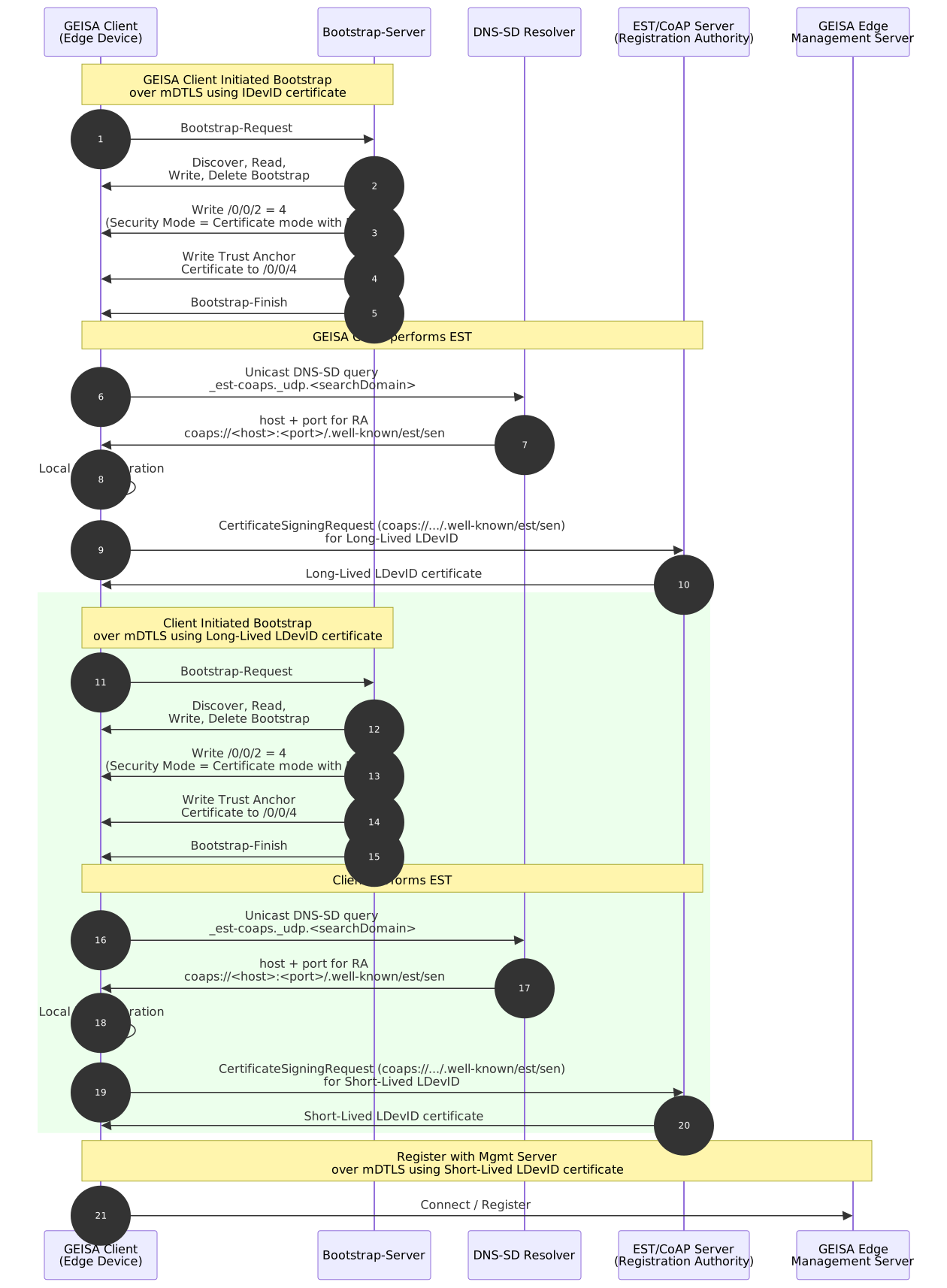
Figure 15.2 Enrollment over Secure Transport triggered by Client-Initiated Bootstrap with long-lived and short-lived LDevIDs.
GEISA conformant ADM clients must support having their IDevID replaced with a long-lived LDevID issued by the system operator, which is used for subsequent reauthentication. GEISA conformant EMS must support issuing a long-lived LDevID and then using that LDevID for to obtain short-lived LDevIDs. The system operator will determine whether they choose to use this feature. Some system operators may accept using an IDevID on an on-going basis.